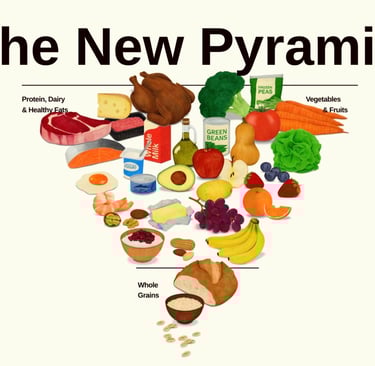
The New Food Pyramid: Tuning into Health Over Corporations
1/15/20262 min read

Introduction to the New Food Pyramid
In recent years, we have witnessed a significant shift in the way nutrition guidelines are being viewed and implemented. The new food pyramid aims to reshape our understanding of healthy eating habits, moving away from the heavy influence of big corporations that have dominated the food and pharmaceutical sectors for far too long. This updated model places a strong emphasis on how our dietary choices affect our health and well-being, particularly for our children.
The Impact of Big Food and Big Pharma
For decades, the government's nutritional guidelines seemed to favor big food and big pharma, often prioritizing corporate interests over the health of the population. With a focus on processed and sugary foods, the old food pyramid led many to misinterpret what a balanced diet truly looks like. These outdated practices contributed to rising health issues, especially among children, who are more susceptible to poor dietary choices.
Rediscovering Healthy Eating
The new food pyramid introduces a more balanced approach to nutrition. It encourages families to focus on whole, unprocessed foods while emphasizing the importance of maintaining a diverse diet loaded with fruits, vegetables, whole grains, and protein sources that are not overly reliant on the industrial food system. Simple adjustments can lead to monumental changes in health, fostering a more wholesome environment for our children.
Additionally, this new perspective promotes education around food choices, paving the way for children to understand the effects of their diets on their overall health. By teaching them to choose healthier options and understand the impact of big food marketing, we instill lifelong habits that can combat the reach of unhealthy influences.
Encouraging Family Participation
As we embrace these new guidelines, it is essential to involve the entire family in the journey toward better health. Meal planning together, visiting local farmers’ markets, or even trying out simple gardening can be great activities that foster appreciation for food, nutrition, and cooking. Educating children on where their food comes from can inspire them to make healthier choices now and in the future. Introducing fresh fruits and vegetables, lean meats and fish at early age can help our children to develop certain taste buds that later in life will make them reach for better options in food choices.
In Conclusion
The new food pyramid symbolizes a necessary transformation not only in dietary guidelines, but in how we view food's role in our lives. Calories are not equal nutrition. We have to remember to nurture and enhance our brain development, especially in children. It starts with proper nutrients.
The new guidelines challenge us to think critically about the influences of large corporations on our health and to prioritize our well-being, starting with our children. By redirecting our focus from the processed foods with chemically altered ingredients that have dominated our plates to nutritious options, we can take meaningful steps toward a healthier future for everyone. I am thrilled we are getting down to foundational level, getting back to basics. Eat REAL FOOD!